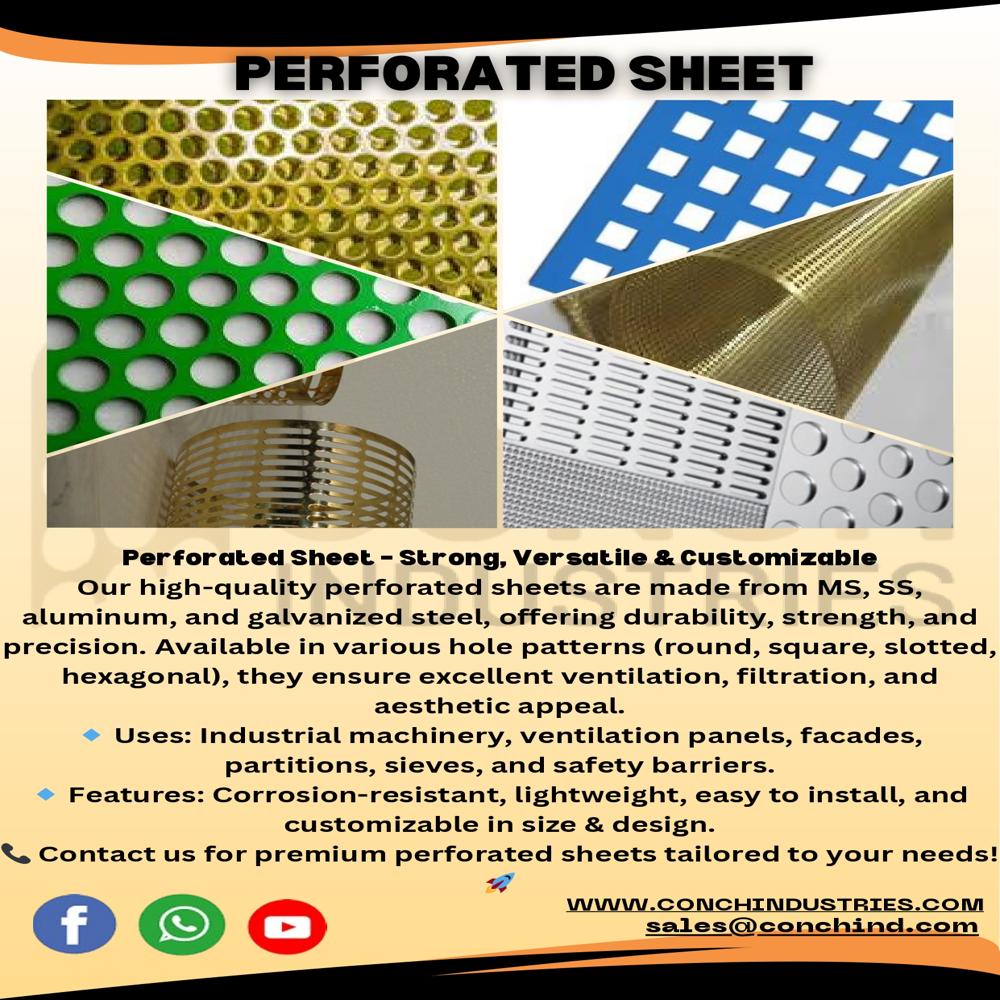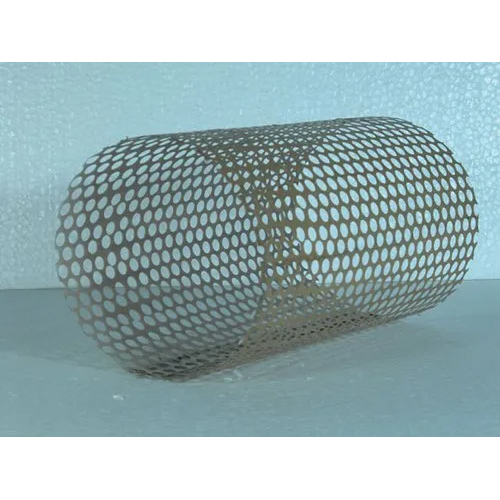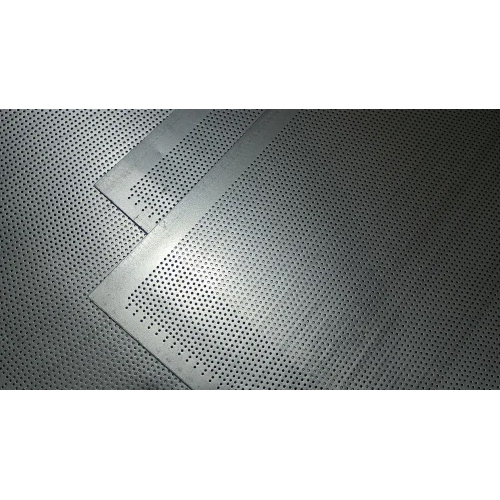
An industrial perforated sheet is a type of metal material that has been punched or stamped with a uniform pattern of holes (perforations). It is highly versatile, offering a combination of strength, reduced weight, and functional control over light, air, liquid, and sound.
The properties of a perforated sheet are determined by its material and its design specifications:
Perforated sheets are produced from various metals chosen for specific industrial requirements:
Stainless Steel (SS): Offers excellent corrosion resistance and hygiene, making it ideal for food, chemical, and pharmaceutical industries.
Carbon Steel (Mild Steel): Provides high strength at a lower cost, often galvanized or painted for corrosion protection.
Aluminum: Known for its lightweight nature, good corrosion resistance, and high strength-to-weight ratio, commonly used in aerospace and architectural applications.
Galvanized Steel: Carbon steel coated with zinc for enhanced rust resistance, suitable for outdoor and high-moisture environments.
The design of the holes is crucial, affecting open area, strength, and function:
| Pattern Type | Shape | Primary Functions |
| Round (Staggered or Straight) | $\bigcirc$ | Most common; excellent for filtration, ventilation, and acoustics. |
| Square (Staggered or Straight) | $\square$ | Provides a high open area for maximum airflow and visual screening. |
| Slotted | $\boxminus$ | Ideal for directional drainage, dewatering, and sifting elongated materials. |
| Hexagonal | $\hexagon$ | Offers a high open area while maintaining good structural stability. |
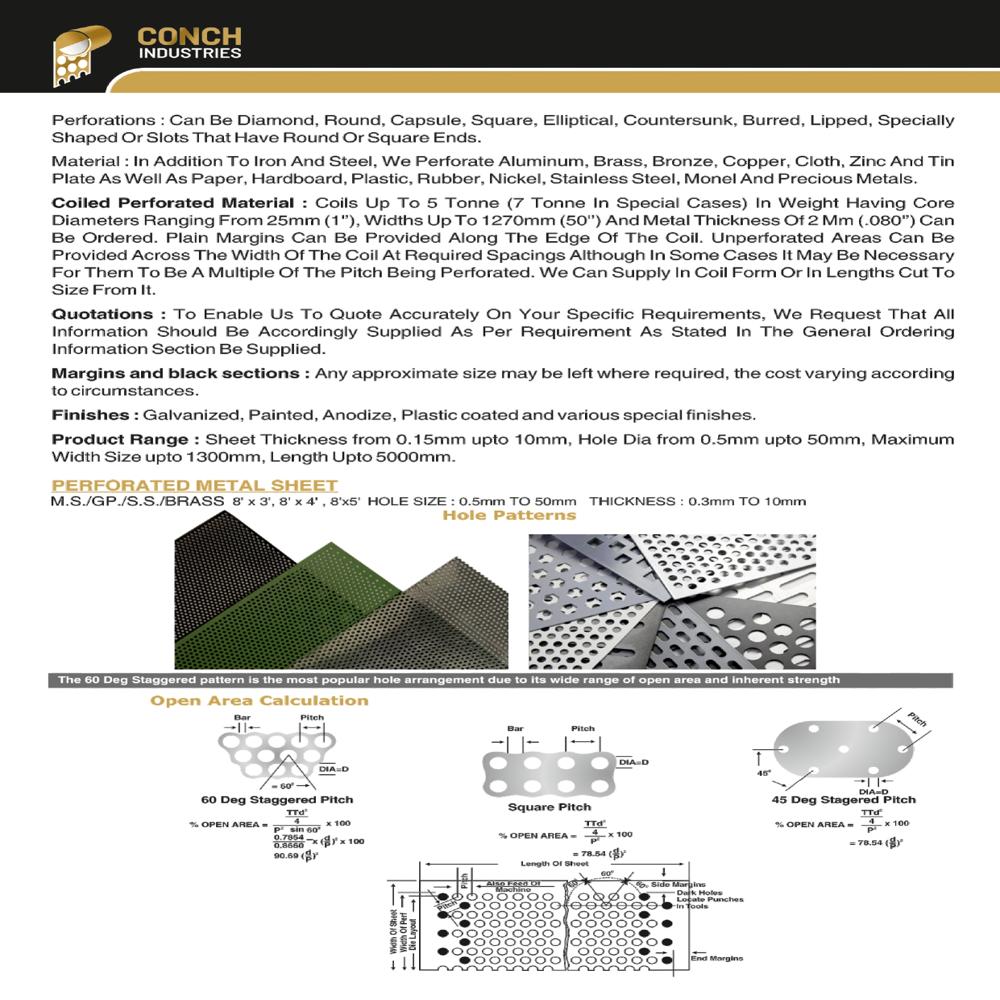
Open Area: The total surface area occupied by the holes, expressed as a percentage. This directly dictates flow rates (air/liquid) and light transmission.
Hole Size and Pitch: The diameter/width of the hole and the distance between hole centers, which are critical for filtration accuracy and structural load-bearing capacity.
Perforated sheets are essential across virtually all manufacturing and construction sectors:
This is the most common use, employing the sheet as a precise mechanical filter.
Sieves and Sorters: Used in mining, quarrying, and agriculture to grade materials like ore, coal, sand, and grain based on particle size.
Industrial Filters: Components in equipment for filtering air, oil, and water in chemical, petrochemical, and manufacturing plants.
Food Processing: Used in drying trays, baking sheets, grain storage aeration, and juice presses.
The controlled open area allows sound energy to be dissipated or absorbed by material placed behind the sheet.
Acoustic Panels: Used in factories, workshops, and concert halls to dampen excessive noise and improve sound quality.
Mufflers/Silencers: Integrated into vehicle exhausts and industrial equipment to reduce operational noise.
Highway Sound Barriers: External structures designed to block or absorb traffic noise.
The open design facilitates necessary airflow and heat exchange.
Machine and Electrical Guards: Protective casings for machinery, servers, and electronic equipment that allow heat to escape and prevent overheating.
HVAC Grilles: Used as vents and diffusers in heating, ventilation, and air conditioning systems to regulate airflow.
Heat Shields: Protect sensitive components from excessive heat, especially in the automotive industry.
Perforated sheets offer a balance of aesthetic appeal, security, and functional benefits:
Building Facades and Cladding: Provide visual texture, security, and act as a solar screen to reduce heat gain and improve a building's energy efficiency.
Anti-Skid Surfaces: Used for industrial stair treads, ramps, and walkways where slip resistance is critical for worker safety.
Railings and Infill Panels: Used for balconies, bridges, and fences to provide safety barriers with wind and light permeability.
The widespread use of perforated sheets stems from their compelling combination of practical advantages:
| Benefit | Description |
| Versatility | Can be made from many materials and customized with countless patterns for varied functions. |
| Lightweight | The perforations reduce material mass, making the sheets easier and cheaper to handle, transport, and install. |
| Durability | High strength allows them to withstand heavy loads and harsh industrial environments. |
| Aesthetics | Provides a modern, high-tech appearance often favored in contemporary architecture. |
| Cost-Effective | Scrap metal from the perforating process can often be recycled, and the material's properties (like energy efficiency) save operational costs over time. |
| Low Maintenance | The durable metal composition and open design are easy to clean and maintain. |

Price: Â
मूल्य या मूल्य सीमा : आईएनआर
न्यूनतम आदेश मात्रा : 1000
माप की इकाई : स्क्वायर फुट/स्क्वायर फुट
मूल्य की इकाई : स्क्वायर फुट/स्क्वायर फुट
तकनीक : Perforated
टाइप करें : इस्पात
मूल्य या मूल्य सीमा : आईएनआर
न्यूनतम आदेश मात्रा : 120
माप की इकाई : स्क्वायर फुट/स्क्वायर फुट्स
मूल्य की इकाई : स्क्वायर फुट/स्क्वायर फुट्स
तकनीक : हॉट रोल्ड
टाइप करें : चादर
मूल्य या मूल्य सीमा : आईएनआर
न्यूनतम आदेश मात्रा : 100
माप की इकाई : स्क्वायर फुट/स्क्वायर फुट्स
मूल्य की इकाई : स्क्वायर फुट/स्क्वायर फुट्स
तकनीक : हॉट रोल्ड
टाइप करें : चादर